📋 In This Guide
- So What Exactly Is OEM Cat Litter?
- And What Is ODM Cat Litter?
- The 5 Things That Actually Matter
- Which One Should You Choose?
- Let's Talk MOQ — The Real Numbers
- Timeline: What "6-8 Weeks" Actually Means
- Why Both Models Work at Gormeet
- Three Questions That Tell You the Answer
- The Trade-offs Nobody Talks About
So What Exactly Is OEM Cat Litter?
OEM — Original Equipment Manufacturing — means you walk in with a formula, and the factory runs it on their line. You own the recipe. They own the machines. Simple as that.
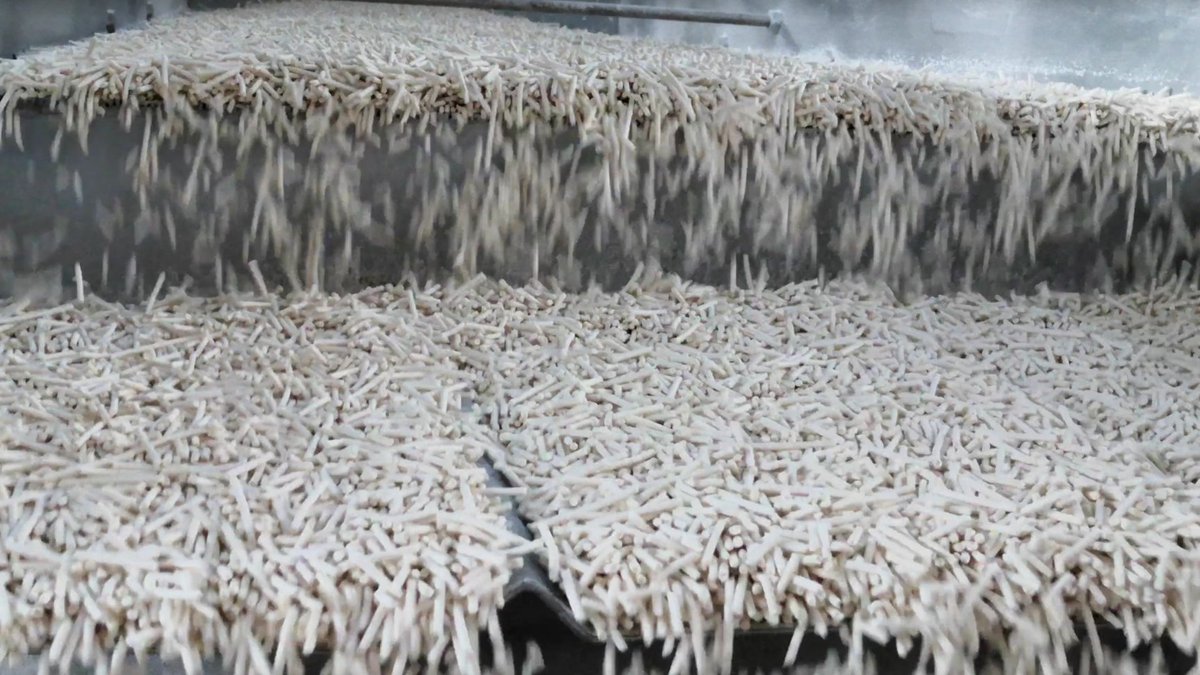
In practice, OEM for cat litter gives you control over things most importers don't think about until it's too late: the exact pea fiber-to-corn starch ratio, whether the particle breaks down in 30 seconds or 3 minutes in water, dust level under 0.5% or under 2%. These are the numbers that determine whether a European pet store chain calls you back, or whether your product gets returned after the first batch. For a full breakdown of what you can customize, see our custom formulation guide.
I've seen OEM orders where the buyer spent 3 weeks fine-tuning lavender intensity — 0.3% vs 0.5% fragrance oil. Sounds obsessive, but in the German market, that's the difference between "pleasant" and "perfume bomb." That's the kind of control OEM gives you.
What OEM Gets You
- You own the formula. We sign an NDA, and your recipe stays yours. We don't put it in our catalog, we don't show it to other buyers.
- Every spec is yours to set. Particle diameter (1.5mm? 2.5mm? 3.0mm?), dust threshold, fragrance type and concentration, clumping time, moisture content — you name it.
- Higher upfront cost. Formulation trials take 2-3 weeks of lab time and raw materials. You should budget $500-$1,500 for R&D fees depending on complexity.
- Real differentiation. Your product is not another white-label tofu litter. It's your formula, period.
- Longer first order. Add 2-4 weeks before production starts. Worth it if brand performance is your competitive edge.
And What Is ODM Cat Litter?
ODM — Original Design Manufacturing — flips the equation. The factory has already done the R&D. You pick a formula from our shelf, put your brand on the bag, and ship. Done in 3 weeks.
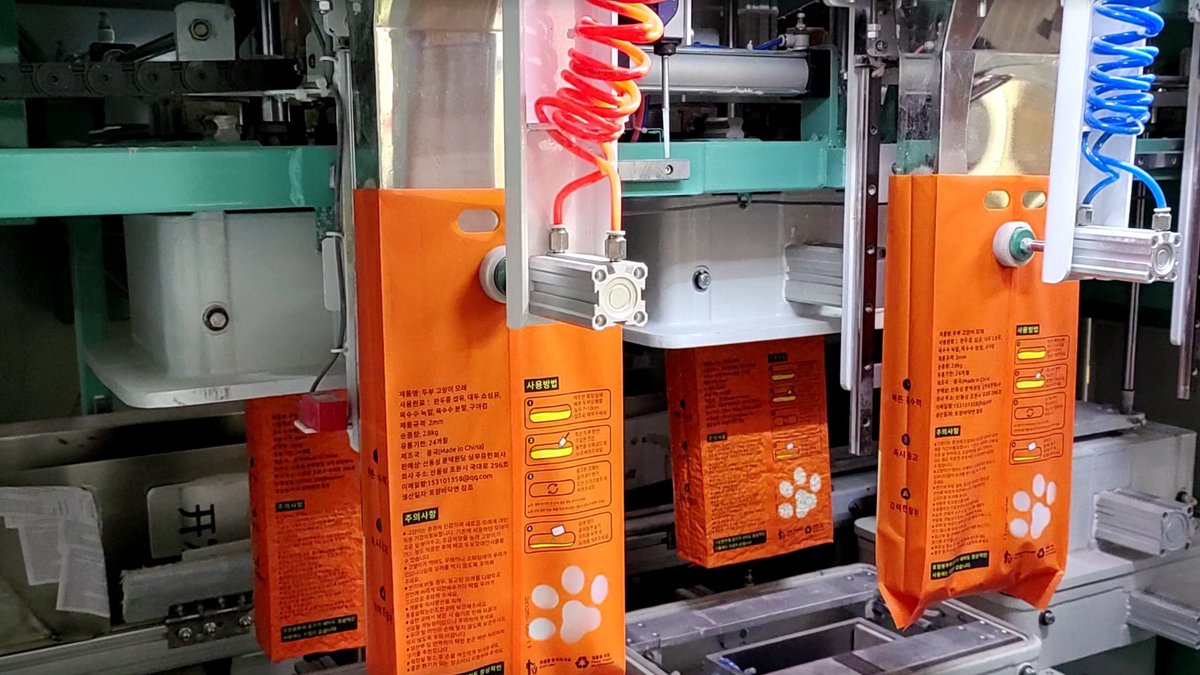
Don't confuse ODM with "generic." At a factory like ours, the base formulas have been refined across hundreds of containers shipped to 20+ countries. When you pick our Grade A tofu formula, you're getting a product that's already survived real-world logistics, customer complaints, and market feedback. The R&D investment is baked in — you're paying for a finished product, not a science project.
What you still control in ODM: packaging design (bag material, print, size — 2.5kg, 5kg, 7kg, 10L), fragrance choice from our tested scent library, and often particle size options. What you don't control: the core formula recipe. If you want 40% cassava and 60% tofu instead of our standard 30/70 blend, you've just crossed into OEM territory. For details on bag types and print options, check our packaging options page.
What ODM Gets You
- Factory owns the formula. But you get a product that's already been market-tested across real orders.
- Speed. Skip R&D entirely. First order ships in 3-4 weeks from deposit.
- Lower upfront. No formulation fees. You pay for product, packaging, and logistics.
- Potentially smaller trial orders. If we're running the same formula for another client, you might be able to piggyback on their production run at 3-5 tons.
- Not exclusive. Other buyers may be using the same base formula. Your differentiation lives in your brand and packaging, not the product chemistry.
The 5 Things That Actually Matter
Here's a side-by-side look at where OEM and ODM differ — and where they don't. Some of these numbers might surprise you.
| Dimension | OEM (You Drive) | ODM (Factory Drives) |
|---|---|---|
| Who Owns the Formula? | You. Protected by NDA. | The factory. Same base formula may serve other brands. |
| How Deep Can You Customize? | Everything. Raw materials, ratios, particle size, dust spec, scent type & intensity, clumping speed, pH, moisture. | Packaging, bag size, scent from our library, particle size from available range. Core formula is fixed. |
| First Order Timeline | 6-8 weeks. Includes lab trials (2-3 weeks), sample shipping & approval, packaging proofing, production. | 3-4 weeks. Packaging design proofing + production only. |
| MOQ | 10 tons (1×20GP). Custom formula needs a dedicated production run — no shortcuts. | 10 tons standard. 3-5 tons sometimes possible if aligning with another production batch of the same formula. |
| Who Should Pick This? | Brands with specific market requirements, proprietary formulas, or unique performance claims. | Startups, market testers, Amazon/e-commerce sellers who need speed, low risk, and predictable quality. |
Which One Should You Choose?
I get asked this at least 3 times a week. The answer depends on three things: whether you know your market already, whether speed or differentiation matters more, and how much cash you want to commit upfront.
| Go OEM when... |
|
| Go ODM when... |
|
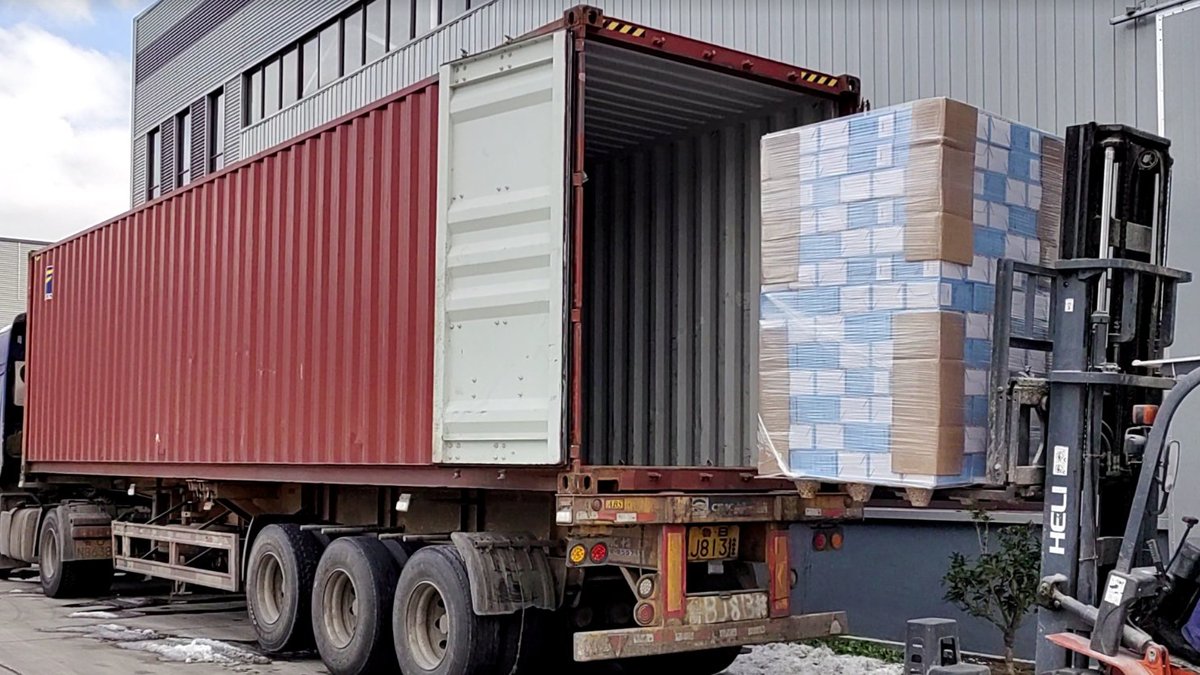
Here's what I tell buyers on calls: start ODM, learn your market, then transition to OEM when you have data. Nearly every Gormeet client who's been with us for 5+ containers follows this path. Container 1-3: ODM, build your brand, collect customer feedback. Container 4+: take that feedback to our R&D lab and tweak the formula. You upgrade to OEM without the gamble of going OEM from day one.
Let's Talk MOQ — The Real Numbers
MOQ kills more deals than price. Here's the honest breakdown for Gormeet — and why ODM can sometimes give you more flexibility. For a deeper dive into MOQ across all product types and shipping configurations, see our minimum order guide.
| Product Type | OEM MOQ | ODM MOQ | Container |
|---|---|---|---|
| Tofu Cat Litter | 10 tons | 10 tons (3-5 tons trial sometimes possible) | 1 × 20GP |
| Cassava Cat Litter | 10 tons | 10 tons | 1 × 20GP |
| Mixed Cat Litter | 10 tons | 10 tons | 1 × 20GP |
| Bentonite Cat Litter | 10 tons | 10 tons | 1 × 20GP |
Timeline: What "6-8 Weeks" Actually Means
Every factory quotes timelines. Here's what each week looks like from our side of the production schedule, for both models.
OEM — 6 to 8 Weeks
Brief lands on our desk
You send the spec sheet: target formula, performance parameters, packaging design brief. Our R&D team reviews feasibility and flags issues immediately — no waiting a week for "we'll look into it."
Lab work
2-3 trial batches produced. Samples shipped to you (DHL/FedEx, 3-5 days transit). You test, give feedback, we tweak. This is the loop that takes time — and it should, because you're building your product.
Lock-in
Final formula approved. Packaging artwork signed off. Production slot reserved on our schedule.
Production
Full production run. Inline QC at 3 checkpoints: raw material intake, mid-production sampling, finished product lab test.
Loading & docs
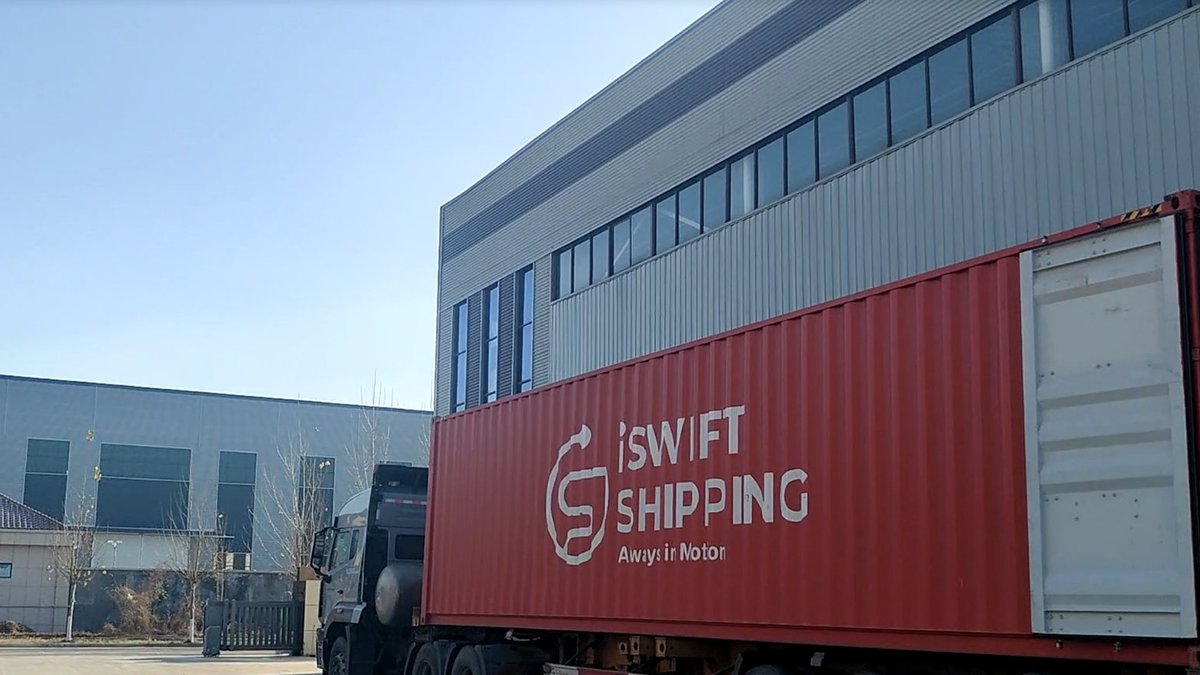
Container loading with photo documentation. Export paperwork prepared. Vessel departure confirmed with tracking.
ODM — 3 to 4 Weeks
Pick & design
You select from our existing formulas, choose a fragrance, send us your packaging artwork. We confirm bag specs and print feasibility same day.
Proof & prep
Packaging artwork approved. QC sample pulled from stock formula and sent to you. Production slot confirmed.
Production
Full run with inline QC. Since this is a known formula with established QC parameters, production moves fast.
Loading & docs
Container loaded, export docs issued, vessel tracking shared with you.
One thing to keep in mind: these timelines assume you respond to sample approvals and packaging proofs within 24-48 hours. The biggest source of delay isn't the factory — it's decision paralysis on the buyer's side. We've had orders where the production was ready to go in Week 3, but the buyer took 2 extra weeks to approve the bag artwork. That's not on us.
Why Both Models Work at Gormeet
Most cat litter factories in China specialize in one model or the other. We built our operation to handle both — which means you don't get pushed toward whatever's easier for the factory.
If You Go OEM With Us
- 3 full-time formulation engineers in our R&D lab. They've developed custom formulas for tofu, cassava, bentonite, and mixed litters across 200+ projects.
- Starting point, not blank slate. With 200+ existing formulas in our database, we rarely start from zero. We iterate from a proven base — it's faster and more reliable.
- 2-3 trial batches included in the development process. You don't pay per iteration — you pay one R&D fee.
- NDA locked. Your formula gets a code number. Only the R&D lead and your account manager know what's behind it.
If You Go ODM With Us
- 12 formulas across 4 product types, all market-tested. We know how each one performs in different climates, with different cat demographics, across different logistics chains.
- 4-grade system (S/A/B/C). Pick the grade that matches your price point and market positioning. Grade S tofu at $X/ton for premium markets, Grade B at $Y/ton for value segments.
- Packaging design support. Have an existing Gormeet design template you like? We'll swap in your logo — free. Need a completely custom bag design from scratch? We charge a one-time design fee (quoted upfront based on complexity — usually $150-400). Either way, you get print-ready AI/PDF files for your bag manufacturer.
- Free 5kg sample. Test before you commit. We'll ship you samples of any formula you're considering, on us.
Three Questions That Tell You the Answer
Before you email any Chinese cat litter factory, answer these honestly. Your answers will point you straight to OEM or ODM — you won't need a consultant.
- Can I describe my ideal cat litter in numbers? Not "good clumping" — "clumps in under 3 seconds at 20°C, dust under 0.5%, particle diameter 2.0mm." If you can write a spec sheet, you're ready for OEM. If you're still figuring out what your market wants, start ODM and let the data guide you.
- What's my real competitive advantage? If your edge is product performance — a litter that genuinely outperforms what's on the shelf — you need OEM. If your edge is brand, marketing, distribution, or pricing, ODM gets you to market faster and cheaper.
- Do I have 6-8 weeks and $500-$1,500 for R&D? Yes → OEM. Need product on the water in a month with no R&D budget → ODM. Simple decision tree, no gray area.
The Trade-offs Nobody Talks About
Here's something you won't find in most factory brochures: cat litter formulation is a constant tug-of-war. Every performance metric you care about — clumping strength, absorption speed, dust level, flushability, fragrance retention — is connected. Push one up, and something else gives. This is physics, not marketing.
Here are a few real examples from our R&D lab:
Clumping vs. Sticking
Want a rock-hard clump that won't crumble when scooped? That usually means more binder — which can make the clump stick to the bottom of the litter box like glue. We've tested formulas where the clump held together underwater for 30 minutes (impressive in the lab, useless in a real litter box because it welded itself to the tray). Finding the sweet spot between "solid clump" and "clean release" is one of the hardest parts of formulation work.
Absorption Speed: Too Fast = Weak Clumps
This one surprises most buyers. If the litter absorbs liquid too quickly, the moisture gets locked into individual particles before they can bind together. Result: a large, fragile clump that falls apart the moment you touch it with a scoop. On the flip side, if absorption is too slow, urine spreads before the clump forms — giving you a thin, flat pancake that sticks to the box and crumbles. The ideal absorption curve is a narrow window, and it changes depending on your target market's climate. A formula that works perfectly in dry Northern Europe might not hold up in humid Southeast Asia.
Dust Control vs. Production Speed
Getting dust below 0.5% means running the production line slower, with extra screening and dedusting passes. That adds cost — about 8-12% more per ton compared to a standard 2% dust spec. Most buyers want "zero dust" but balk at the price. The honest answer: 99.5% dust-free is achievable and practical. "Zero dust" doesn't exist in a factory that produces 100 tons a day. Anyone who promises it is either lying or has never run a production line.
Fragrance Longevity vs. Cat Acceptance
The stronger the fragrance, the longer it masks odors — but the higher the chance a cat rejects the litter entirely. Cats have 14 times more olfactory receptors than humans. What smells "mildly pleasant" to you can be overwhelming to a cat. We've had returns where the product tested perfectly in the lab (great clumping, low dust, nice scent), but cats simply refused to use it. The fragrance was too strong. Now we recommend testing fragrance intensity at 50% of what smells "right" to a human nose.
We'll be expanding on these topics in future articles — diving deep into formulation science, regional market differences, and how to read a cat litter spec sheet like a pro. If there's a specific trade-off you're wrestling with, reach out. We geek out on this stuff.
A Final Thought
Making cat litter is a lot like being human. Every strength comes with a corresponding weakness. The goal isn't to eliminate every flaw — it's to find the balance that works for your specific situation. There is no perfect cat litter. There is no perfect person. But there is perfection in finding your balance.
Still Not Sure? Let's Talk It Through.
We've walked hundreds of buyers through this decision. I'll ask about your market, your timeline, and your budget — and tell you honestly whether OEM or ODM makes sense for where you are right now. No pitch, just a straight answer.
Get a Straight Answer →