In This Guide
- The 6 Main Raw Materials in Cat Litter Manufacturing
- How Raw Material Quality Affects Final Product Performance
- Tofu (Soy Fiber) — Sustainability & Sourcing
- Sodium Bentonite — Clumping Power & Grade Differences
- Cassava Starch — The Emerging Eco-Friendly Choice
- Silica Gel — Premium Absorption Chemistry
- Quality Control at Gormeet: 14-Step Inspection
- FAQ
The 6 Main Raw Materials in Cat Litter Manufacturing
Every cat litter formula starts with a decision about raw materials. The choice determines clumping behavior, dust level, odor control, weight, cost, and the sustainability story you can tell your customers. For B2B buyers, understanding these six base materials is the first step toward choosing a product line that fits your market.
At Gormeet, we manufacture across all six categories, but our focus in 2026 is on plant-based and hybrid formulas. Here is how the raw materials map to our product strategy:
| Raw Material | Key Properties | Gormeet Product Line |
|---|---|---|
| Tofu / Pea Fiber | Fast clumping, low dust, flushable, biodegradable | NaturePure™ Tofu (core volume SKU) |
| Cassava Starch | Lightweight, smooth texture, fast clumping, premium feel | CassavaCrisp™ Cassava (premium SKU) |
| Sodium Bentonite | Hardest clumps, fastest clumping, natural clay | DualForce™ Mixed (tofu-bentonite hybrid) |
| Silica Gel | Highest absorption, no clumping, ultra-low dust, lightweight | Silica Crystal line |
| Wood / Paper | Lightweight, biodegradable, lower clumping | Available as custom formulation |
| Corn / Wheat | Natural scent, biodegradable, moderate clumping | Available as custom formulation |
How Raw Material Quality Affects Final Product Performance
The finished bag of cat litter is only as good as the raw materials inside it. Two products with the same label — "tofu cat litter" — can perform completely differently because the underlying raw materials differ. Here are the four performance areas most directly affected by raw material quality:
1. Clumping Speed and Hardness
Clumping depends on the protein content of pea fiber, the starch content of cassava, and the sodium-to-calcium ratio of bentonite. High-protein pea fiber (≥85%) and high-montmorillonite sodium bentonite form hard clumps that survive scooping and short water exposure. Low-grade materials produce soft, crumbly clumps that break apart when lifted.
2. Dust Level
Dust is generated during raw material handling, drying, and granulation. Pre-de-dusted pea fiber and low-dust bentonite reduce the finished product dust by 60–80% compared to untreated materials. This matters for EU and Scandinavian markets, where dust exposure is increasingly regulated.
3. Odor Control
Odor control comes from the combination of absorption, ammonia binding, and optional additives. Tofu and cassava fibers bind ammonia well. Bentonite locks odor inside clay. Silica gel adsorbs liquid before odor forms. The raw material determines how naturally the odor control works — without relying on heavy fragrance masking.
4. Absorption Capacity and Usage Efficiency
High-quality materials absorb more liquid per gram, meaning the litter lasts longer in the box. This directly affects customer value perception. Low-quality materials saturate quickly, increasing the total weight consumed per month and reducing perceived value.
Tofu (Soy Fiber) — Sustainability & Sourcing
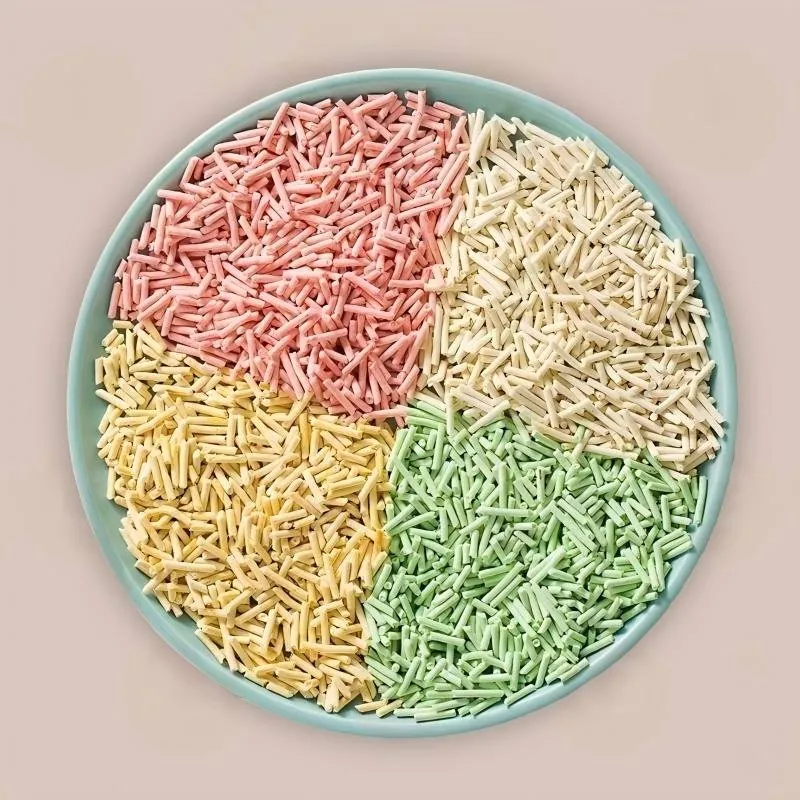
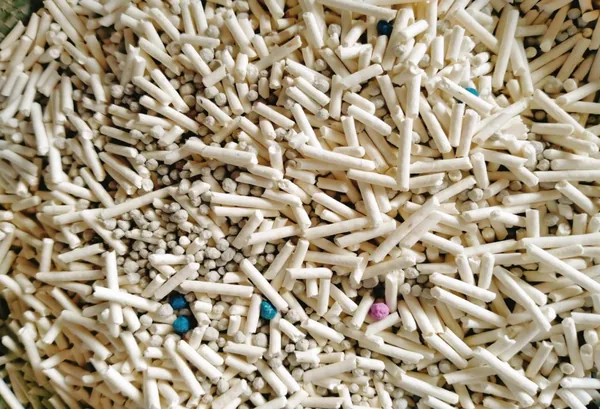
Tofu cat litter is the workhorse of the plant-based segment. Despite the name, it is not made from edible tofu. The base is pea fiber or soy fiber left over after plant-protein extraction. These fibers are compressed, dried, and granulated into the soft, scoopable litter that consumers recognize.
Why Pea Fiber Beats Soy and Corn
Early plant-based litters used soybean residue or corn starch. Both had problems: soybean residue carried a bean smell that some cats rejected, and corn starch attracted pantry pests in humid storage. Pea fiber is odor-neutral, pest-resistant, and clumps more firmly than either alternative. It is the reason Gormeet's tofu line is the most consistent seller across markets.
Sourced from Shuangta Food Group
Gormeet's pea fiber comes from Shuangta Food Group (双塔食品集团), the largest pea protein producer in China. Every batch arrives with a certificate of analysis (COA) showing protein content, moisture, and microbial counts. We share these reports with qualified buyers on request.
Video 1: Shuangta Pea Fiber Arrives at Gormeet
This video shows a fresh Shuangta pea fiber shipment arriving at our factory gate. Notice the batch-numbered bags, the moisture-testing station before unloading, and the dedicated raw material storage area kept separate from cassava and bentonite.
Video 2: Raw Material Unloading Process
This video shows our intake team performing unloading QC: portable moisture testing, visual inspection for discoloration or foreign material, and documentation in our batch-traceability system.
Sodium Bentonite — Clumping Power & Grade Differences
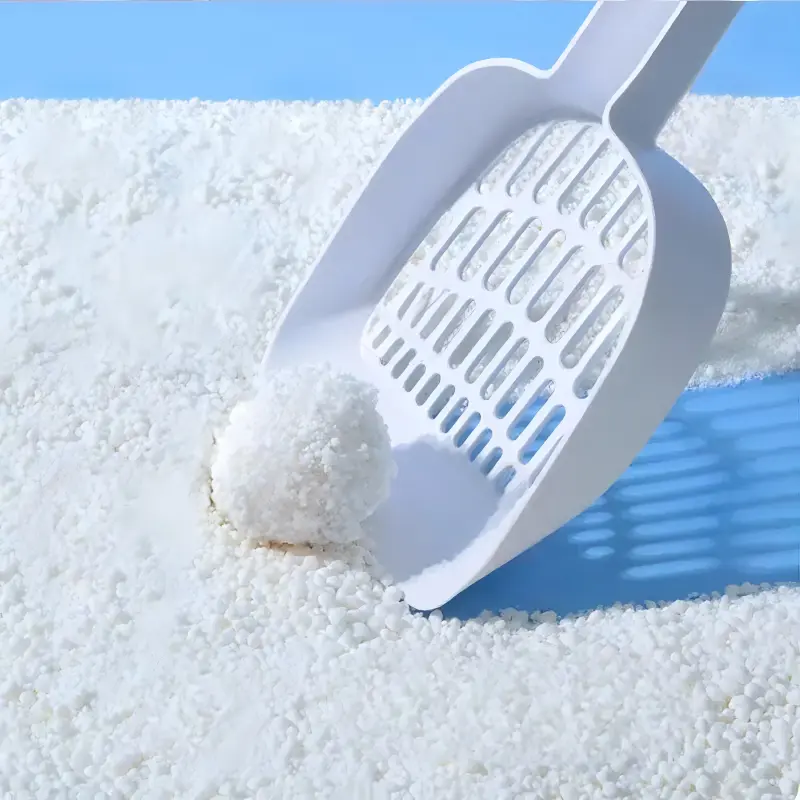
Bentonite is the classic cat litter raw material. It is a natural clay that expands and hardens when it contacts liquid. Not all bentonite is the same, and the difference between sodium and calcium grades directly affects the retail positioning of the final product.
Sodium vs. Calcium Bentonite
| Characteristic | Sodium Bentonite | Calcium Bentonite |
|---|---|---|
| Clumping speed | 1–2 seconds | 3–5 seconds |
| Clump hardness | Rock-hard; survives scraping | Firmer than plant-based but softer than sodium |
| Dust level | Higher potential; needs de-dusting | Naturally lower dust |
| Best positioning | Premium bentonite / fast clumping | Value / economy / bulk formulas |
Where Gormeet Sources Bentonite
We source sodium bentonite from Inner Mongolia (high-purity deposits with ≥85% montmorillonite) and calcium bentonite from Shandong (local mines within 150 km of our factory). Montmorillonite content directly determines clump hardness and absorption capacity.
Tofu-Bentonite Mixed: The Volume Compromise
Tofu-bentonite mixed litter is the fastest-growing category in price-sensitive markets that still want a "natural" label. The typical blend is 60–70% tofu base plus 30–40% bentonite. The bentonite provides instant clumping and lower cost; the tofu base provides the plant-based story and lower dust.
Cassava Starch — The Emerging Eco-Friendly Choice
Cassava-based cat litter is the fastest-growing premium segment in Europe and North America. It is lighter than tofu, has a smoother texture that consumers describe as "soft on paws," and clumps slightly faster than pure tofu in our testing.
Where Cassava Comes From
The world's cassava belt runs through Southeast Asia (Thailand, Vietnam, Indonesia) and southern China (Guangxi, Yunnan). Starch content and elasticity vary by region, rainfall, and harvest timing. Gormeet works with a Guangxi-based supplier whose starch content consistently tests at 68–72%, which is the sweet spot for cat litter.
Cassava vs. Tofu for B2B Buyers
| Dimension | Cassava | Tofu |
|---|---|---|
| Raw material cost | ~12–18% higher | Baseline — most economical plant option |
| Clumping speed | 2–4 seconds | 3–5 seconds |
| Texture | Smoother, silky feel | Slightly more natural fiber texture |
| Best market fit | Premium / Europe / North America | Core / volume / broadest acceptance |
Tofu-Cassava Mixed: The Best of Both Worlds
Tofu-cassava mixed litter is where Gormeet sees the most OEM/ODM growth in 2026. A typical blend of 60–70% tofu plus 30–40% cassava delivers the clumping speed of cassava at a cost closer to tofu. The result is a smoother, premium-feeling product that supports higher retail pricing.
Silica Gel — Premium Absorption Chemistry
Silica gel cat litter is the premium option in the non-clumping segment. It is made from synthetic silicon dioxide crystals that absorb liquid and trap odor at the molecular level. Silica does not clump; instead, liquid evaporates from the crystals, leaving the litter usable for weeks without full replacement.
Type A vs. Type B Silica Gel
Type A silica gel has a smaller pore size and is ideal for cat litter because it adsorbs liquid and ammonia efficiently. Type B has larger pores and is used for industrial drying, not litter. Gormeet uses only Type A silica gel for our crystal cat litter line.
When Silica Gel Makes Sense for Your Brand
- Urban / apartment markets: Extremely low dust and lightweight bags are attractive for consumers in small spaces.
- High-margin premium channels: Silica gel supports higher price points per liter.
- Healthcare / allergy positioning: No dust cloud and low tracking make it ideal for respiratory-sensitive households.
Quality Control at Gormeet: 14-Step Inspection
Raw material advantage is not just about supplier names. It is about the inspection process that keeps inferior batches out of production. Every raw material shipment that enters Gormeet passes through a 14-step inspection protocol before it reaches the production line.
1. Supplier Certificate Review
COA, origin, and batch number checked against the purchase order.
2. Visual Bag Inspection
Check for damaged packaging, contamination, or unusual discoloration.
3. Moisture Test at Receiving
Portable moisture meter tested before unloading begins.
4. Protein Content (Pea Fiber)
Near-infrared or lab test to confirm ≥85% protein for food-grade fiber.
5. Starch Content (Cassava)
Tested to confirm 68–72% starch content for consistent clumping.
6. Montmorillonite Test (Bentonite)
Confirm ≥85% montmorillonite for sodium bentonite batches.
7. Sodium / Calcium Ratio
XRF or lab test to confirm bentonite grade and prevent undisclosed blending.
8. Foreign Material Screening
Visual and magnetic screening for metal, stones, or plastic.
9. Microbial Count Check
Random samples sent to the lab for total plate count and mold.
10. Storage Assignment
Segregated by material type in climate-controlled warehouses (45–55% RH).
11. Batch Traceability Logging
Every batch ID is logged into our ERP with supplier, COA, and test results.
12. First-Production Sample Test
First 30 minutes of production run are sampled and tested for clump and dust.
13. In-Line Dust Monitoring
Continuous dust monitoring during granulation and screening.
14. Final Release Inspection
Finished product is sampled for clump hardness, moisture, dust, and scent before release.
FAQ: Common Questions About Cat Litter Raw Materials
Q: What is the most important raw material for tofu cat litter?
Pea fiber is the most important raw material for tofu cat litter. It determines clumping strength, dust level, and flushability. Gormeet uses Shuangta food-grade pea fiber with ≥85% protein content.
Q: Is cassava cat litter better than tofu cat litter?
Cassava is lighter and has a smoother texture, which some premium markets prefer. It clumps slightly faster and supports higher retail margins. Tofu is more economical and has broader market acceptance. "Better" depends on your target positioning.
Q: Why does sodium bentonite clump harder than calcium bentonite?
Sodium bentonite has higher swelling capacity and montmorillonite content. When it contacts liquid, it expands into a dense, rock-hard clump. Calcium bentonite swells less and produces a softer clump.
Q: Can I visit Gormeet's raw material suppliers?
Yes. We organize supplier visits for qualified buyers with serious inquiry. Shuangta (pea fiber) and our cassava supplier are both within 200 km of our factory. Contact us on WhatsApp to schedule.
Q: What MOQ does Gormeet require for custom raw material formulas?
Standard MOQ is 10 tons per formula, equivalent to one 20GP container. This applies to raw material adjustments such as higher pea fiber ratio, different cassava source, or sodium vs. calcium bentonite.
Q: Does Gormeet offer organic or certified raw materials?
Our pea fiber is non-GMO and food-grade. We can source certified organic pea fiber on a custom OEM basis with a 10-ton MOQ. Contact us to discuss if your market requires organic certification.
Want to See Our Raw Materials for Yourself?
Request a free 5kg sample. Test the clumping, dust level, and odor control yourself. Free DHL shipping, no strings attached.
📱 Request a Free Sample → wa.me/8613631130272