Two suppliers quote you for the same tofu cat litter. Supplier A is $40 per ton cheaper than Supplier B. The decision looks easy — until the container arrives.
The bags from the cheaper quote absorbed more moisture at the factory, so part of the "product" you paid for was water. The dust content is higher, so a share of every bag goes through the sieve and into the bin at your customer's house. The bags are weaker, and a few dozen broke during unloading. And because the supplier packed the container loosely, you paid the same ocean freight for fewer sellable units.
None of these costs appeared on the quote. All of them appear in your margin.
Landed cost is the total cost of a product when it arrives at your warehouse: the product price, plus international freight, insurance, duties, port and handling charges, and local delivery — adjusted for what you can actually sell. For cat litter, a heavy, moisture-sensitive product shipped in bulk, the gap between quoted price and landed cost is wider than in most categories. This guide breaks down where that gap comes from and how to compare two quotes on equal terms.
Compare cat litter quotes on landed cost per sellable unit, not price per ton. Ask every supplier six questions: What is the moisture content? What is the dust percentage? What packaging is included? How many tons fit in a container with your loading plan? Which trade term does the price cover? And what payment structure do you offer — deposit, balance trigger, accepted instruments? A quote that cannot answer these six questions is not a cheaper quote — it is an incomplete one.
01The formulaWhat Landed Cost Actually Includes
Landed cost = product cost + freight + insurance + duties and taxes + port, customs and handling fees + delivery to your warehouse. For a realistic comparison, add one more adjustment: deduct the product you cannot sell (dust, moisture gain, damaged bags).
A FOB price covers only the first line. A CIF price covers product, freight and insurance, but leaves duties, port charges and local delivery to you. Two quotes using different trade terms are not comparable until both are converted to the same point in the journey — ideally, your warehouse door.
For heavy goods like cat litter, freight is not a side note. Depending on route and shipment size, freight and logistics typically account for 5–30% of landed cost — so a small difference in price per ton matters far less than a difference in how much sellable product fits into one container.
02Below the waterlineSeven Places Where Quotes Hide Costs
The only number on the quote: product price per ton.
2.1Moisture: paying for water
Cat litter is hygroscopic — both bentonite and plant-based litters absorb water from the air. A product packed at a higher moisture content weighs more per bag and per container, which means part of the tonnage you pay for is water, not litter.
Higher moisture also weakens clumps and increases the risk of mold during a sea voyage of several weeks. When comparing quotes, ask for the moisture content in the specification sheet and the batch Certificate of Analysis (COA), not just the product name.
2.2Dust: the percentage you throw away
Dust percentage is the share of the product that arrives as fine particles rather than usable granules. Your customers notice it when they pour; you should notice it when you calculate cost.
A product with 5% dust effectively delivers 5% less sellable material per ton than a product with 0.5% dust. At that point, a quote that looks cheaper per ton can be more expensive per usable ton. Dust level is a specification you can request and verify in a sample test — it should be on the spec sheet, in writing.
2.3Packaging: the bags that break are yours
Quotes usually state a bag weight, not a bag quality. Film thickness, seal strength and whether the bag is designed for pallet stacking determine how many bags split during loading, the sea voyage and warehouse handling.
Every broken bag is a double loss: the product is unsellable, and it contaminates the cartons and bags around it. Ask what packaging is included in the quoted price — material, thickness, printing — and whether stronger export packaging is available and at what cost. Upgrading packaging often adds less to the unit cost than breakage removes from it.
2.4Container loading: the freight you pay for air
Ocean freight is charged per container, not per ton. How the container is loaded therefore decides your freight cost per ton.
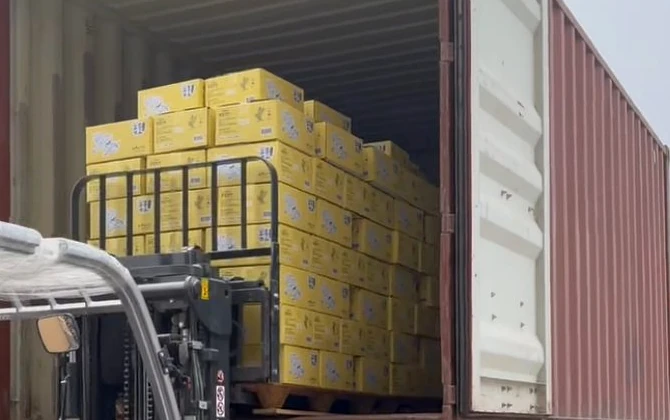
Bag dimensions, pallet vs. floor loading, and whether a supplier can combine multiple SKUs in one shipment all change how many tons a 20ft or 40ft container actually carries. A supplier who can plan a mixed container — combining your fast-moving SKUs in one shipment — reduces both your freight per unit and your inventory risk on slower items.
This is also where MOQ structure matters. A transparent supplier separates three questions that are often bundled into one number: the production batch MOQ (the minimum the factory produces in one run), the packaging SKU minimum (how many bags per SKU design), and container loading (how those batches and SKUs fill a ~20GP container). When these three are quoted as a single take-it-or-leave-it figure, you lose the room to optimize any of them.
2.5Trade terms: the price that isn't the price
Check what the quoted trade term actually covers — and who controls the freight. Under CIF, the supplier chooses the forwarder and the freight is bundled into your price, which removes your ability to compare or negotiate that leg. Under FOB, your own forwarder handles the ocean leg and the cost is visible.
Neither term is automatically better. What matters is knowing which costs sit inside the number you were quoted. And even a perfect CIF comparison stops at the port gate — which is where the next two cost layers begin.
2.6Duties and classification: the line item that isn't on any quote
No supplier quote includes your import duty — by definition, it is yours to pay. But duty changes how comparable two quotes are, because different litters are classified differently. In the US, for example, bentonite cat litter generally falls under HTS 2508.10 (duty-free at the base rate), other clays under 2508.40, and silica gel litters under 2811.22 (3.7%). Plant-based and mixed litters have no single settled code and are classified case by case.
Additional duties sit on top of the base rate and depend on origin and policy at the time of entry — US Section 301 tariffs on Chinese goods, for instance, changed repeatedly during 2026. Do not build a comparison on a rate you read in an article, including this one: confirm the current rate for your specific product with a licensed customs broker at time of entry. The practical rule: two quotes for different materials, or from different origin countries, can reverse their ranking after duty even when the FOB prices look close.
2.7After the port: where CIF ends and your costs begin
A CIF price ends at the destination port. What happens between the port gate and your warehouse is yours: terminal handling charges (THC), ISPS and security fees, seal and documentation fees — typically a few hundred dollars per container — plus customs bond, broker fees and local delivery.
The expensive version of this layer is demurrage and detention: daily charges when a container is not cleared and returned within the carrier's free time. In North America these run roughly $100–300 per container per day, and can exceed $400 at congested ports; across the industry, nine major carriers collected about $15.4 billion in these charges between 2020 and 2025 (US Federal Maritime Commission data). A delayed document or an unprepared broker can add more to your landed cost than the entire price difference between two suppliers.
Three habits keep this layer small: confirm the free-time days in writing before booking, use telex release so documents never hold the container, and have your customs broker ready before the vessel arrives.
03The methodHow to Compare Two Quotes on Equal Terms
Work through each quote with the same six questions. Any supplier who manufactures the product should be able to answer all six in writing.
| Question | What to ask for | Why it moves the cost |
|---|---|---|
| Moisture content | Spec sheet + batch COA | Water weight you pay for as product; mold risk in transit |
| Dust percentage | Spec sheet; verify in a sample sieve test | Share of each ton that is not sellable |
| Packaging spec | Film material and thickness, seal type, pallet pattern | Breakage rate during shipping and handling |
| Loading plan | Tons per 20GP/40HQ with your SKU mix, mixed-container options | Freight cost per sellable ton |
| Trade term scope | FOB or CIF, named port, what is excluded | Which costs still sit outside the quote |
| Payment structure | Deposit %, balance trigger, accepted instruments | Cash tied up for weeks; quality-risk exposure |
The payment row deserves a second look. A 30% deposit ties up your cash for the weeks of production and sailing. A letter of credit shifts risk to the bank but typically costs 0.75–1.5% of order value, and many factories decline LCs below roughly $50,000. What matters most is the balance trigger: paying the balance against a bill of lading means paying before you have seen the goods, while a balance linked to inspection — a pre-shipment inspection typically runs $300–600 per container — converts your quality risk into a fixed, known cost.
Then run the numbers to your warehouse door: quote + freight + insurance + duties + port and handling + local delivery, divided by the tons you can actually sell. That figure — landed cost per sellable ton — is the only comparison that survives contact with reality.
04The arithmeticA Worked Example (Illustrative Numbers)
The figures below are simplified and illustrative — they are not any supplier's actual prices. They show the method.
Scenario 1 — same terms, different product. Supplier A quotes $400/ton; Supplier B quotes $440/ton. For a 20-ton container load:
· Moisture and dust: A's product carries higher moisture and 5% dust; B's spec shows 0.5% dust. Sellable product: A ≈ 19 tons, B ≈ 19.9 tons.
· Breakage: A's standard bags lose an estimated 1% in transit; B's export packaging loses almost none.
· Landed adjustment: Add identical freight, duties and local charges to both. Divided by sellable tons, A's apparent $40/ton advantage shrinks to almost nothing — and can invert.
Scenario 2 — same product, different terms. Now take one product quoted two ways: A offers CIF to your port; B offers FOB. A's number looks complete, but it ends at the port gate — THC, documentation, demurrage risk and inland delivery are still outside it, and the bundled freight leg cannot be compared or negotiated. B's number looks incomplete, but every remaining line is visible and quotable: you can price the ocean leg with your own forwarder, confirm free time, and budget port fees explicitly. The "complete" quote is often just the one whose missing lines you cannot see.
The lesson is not that the higher quote is always better. It is that the cheaper quote was never actually cheaper; it was just calculated on a different basis.
05The standardWhat a Transparent Quote Looks Like
A supplier who controls their own production can put every variable on paper before you ask twice. Before signing, your quote should state:
- Full specification — granule size, moisture, dust, absorption, with a batch COA available for each shipment
- Packaging spec in writing — material, thickness, printing, pallet configuration
- Loading plan — tons per container for your SKU combination, including mixed-container options
- Trade term with named port and an explicit list of what is not included
- MOQ structure in three parts — production batch, packaging SKU, container loading — so you can optimize each separately
- Payment structure — deposit percentage, balance trigger, accepted instruments, and whether inspection-linked balance payment is available
If a quote covers these six points, comparing it against any other quote is arithmetic, not guesswork.
At Gormeet, quotations follow this structure by default: batch MOQ and packaging minimums are quoted separately, mixed-SKU container loading is planned before pricing, and every shipment ships with its batch COA. If you are comparing quotes right now, send us your current specification and target market — we will show you the same breakdown for your case.
06FAQFrequently Asked Questions
What is landed cost for cat litter?
Landed cost is the total cost of cat litter when it reaches your warehouse: product price plus international freight, insurance, import duties, port and handling charges, and local delivery — adjusted for product you cannot sell, such as dust, moisture weight and damaged bags.
Is FOB or CIF better when importing cat litter?
Neither is automatically better. FOB gives you control and visibility over ocean freight through your own forwarder; CIF bundles freight into the supplier's price, which is simpler but hides the freight cost. The key is converting both quotes to the same point — your warehouse door — before comparing.
How much is import duty on cat litter from China?
It depends on classification and destination. In the US, bentonite litter generally falls under HTS 2508.10 (duty-free base rate), other clays under 2508.40, and silica litters under 2811.22 (3.7%); plant-based and mixed litters are classified case by case. Additional duties such as Section 301 tariffs changed repeatedly in 2026 — confirm the current rate for your product with a licensed customs broker at time of entry.
What fees apply after a CIF shipment arrives at the port?
Terminal handling, security and documentation fees typically run a few hundred dollars per container, plus customs bond, broker fees and local delivery. If the container is not cleared within the carrier's free time, demurrage and detention add roughly $100–300 per container per day in North America — sometimes more at congested ports.
How much cat litter fits in a 20ft container?
It depends on bag dimensions, whether pallets are used, and the product's bulk density. Ask each supplier for a loading plan in tons for your specific SKU mix rather than relying on a generic figure — differences in loading efficiency directly change your freight cost per ton.
Why do cheaper cat litter quotes often cost more in the end?
Because unit price excludes what makes product sellable: moisture content (you pay for water), dust percentage (unsellable share), packaging strength (breakage in transit) and container loading efficiency (freight per ton). Comparing landed cost per sellable ton, not price per ton, exposes these differences.
Should I test a sample before placing a bulk order?
Yes. A sample lets you verify dust, clumping and odor control against the written specification before committing to a container. Order samples from the same production line and batch process that will supply your bulk order, and compare them against the COA.
Compare on equal terms
Get a transparent quote with the full breakdown
Send your current specification and target market. We quote batch MOQ, packaging minimums and container loading separately — with a batch COA for every shipment.
Get a Transparent Quote →Test the product before you run the numbers
Verify dust, clumping and odor control against the written specification. Samples and shipping terms are confirmed by email before dispatch.
Request Samples →Related: Minimum Order & MOQ Structure · How to Reduce Cat Litter Shipping Costs · Import Cat Litter from China: The Complete Guide · Why Samples Never Match Bulk Orders