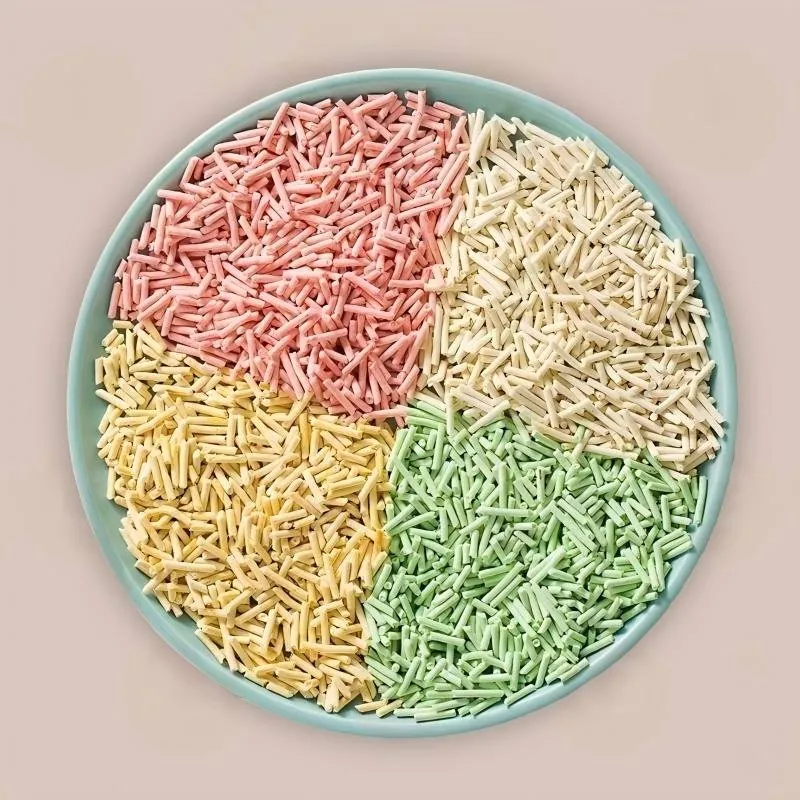
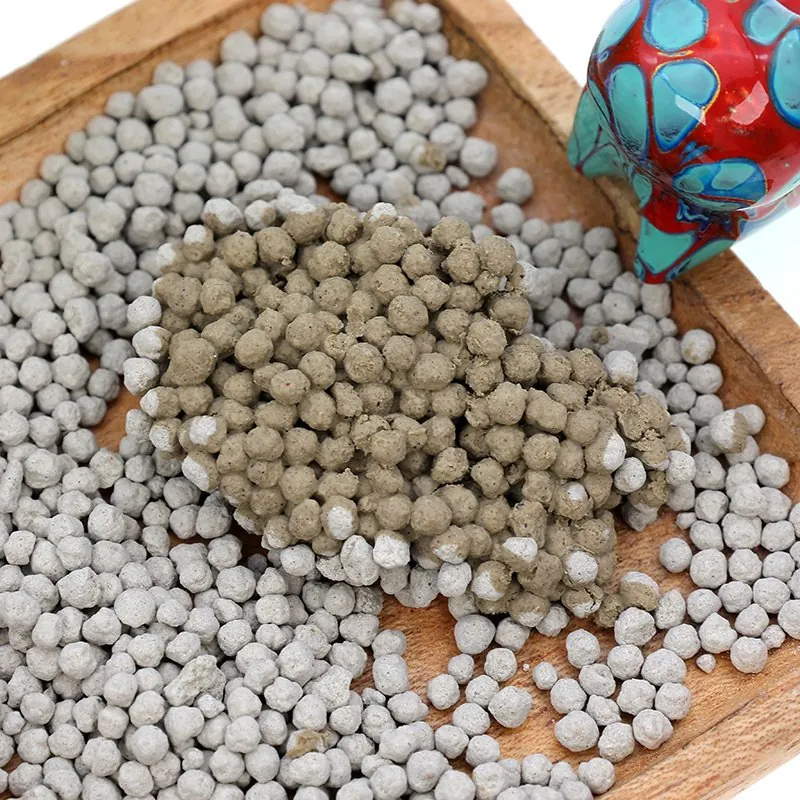
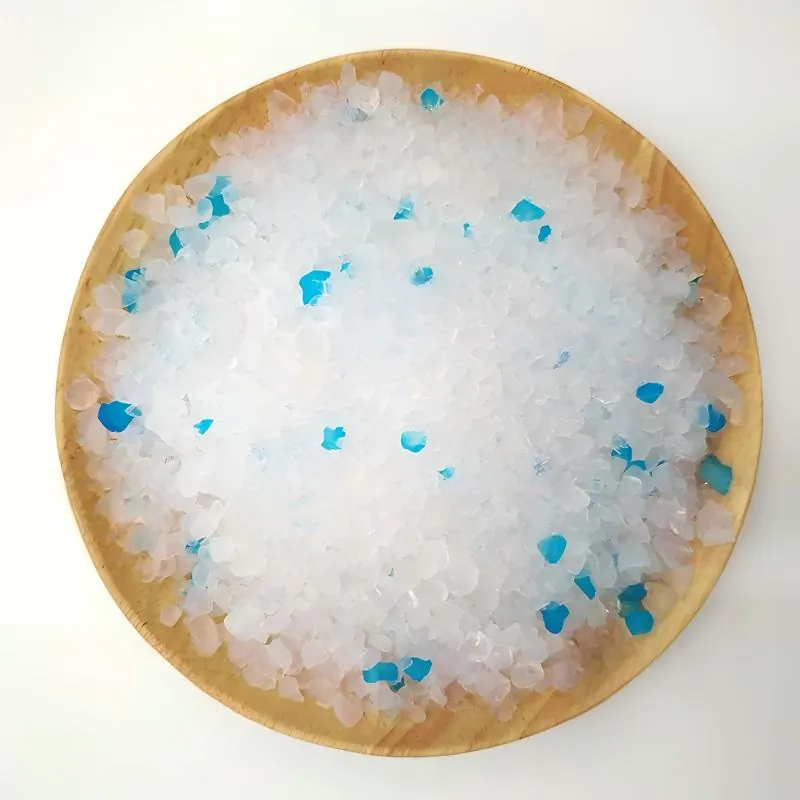
Purpose: Evaluate visual quality of cat litter particles, including color uniformity, shape consistency, surface smoothness, and impurities.
Equipment:
- White Background: Clean white paper or plate (for contrast)
- Magnifying Glass: 10x magnification (for detail inspection)
- Ruler: Millimeter scale (for size measurement)
- Good Lighting: Natural daylight or 6500K LED light
Test Procedure:
- Spread 100g cat litter sample on white background
- Observe under good lighting conditions
- Check color uniformity across particles
- Check shape consistency (cylindrical/spherical/crystal/irregular)
- Check surface smoothness (smooth/rough/cracked)
- Check for impurities (dust clumps, foreign particles, mold)
- Measure particle size range (length/diameter in mm)
- Record observations with photos if possible
Acceptable Criteria:
- Color: Uniform within batch, no significant variation
- Shape: Consistent shape, ≤5% irregular particles
- Surface: Smooth, no visible cracks or defects
- Impurities: ≤0.1% foreign particles or dust clumps
| Cat Litter Type | Appearance Description |
|---|
| Tofu | Uniform cylindrical pellets, light cream color |
| Cassava | Irregular cylindrical particles, off-white to pale yellow |
| Bentonite | Spherical gray/blue particles |
| Silica Gel | Translucent blue/white crystal beads |
| Crushed Tofu | Irregular crushed fragments, variable size |
| Mixed | Mixed cylindrical strips + fine granules |
Note: Appearance is the first quality indicator customers see. Consistent appearance builds trust and perceived quality.
Purpose: Measure water content in cat litter. Excessive moisture leads to mold growth, poor clumping, and shortened shelf life.
Equipment:
- Oven: Capable of maintaining 105±2°C
- Digital Scale: 0.01g precision
- Desiccator: With silica gel desiccant
- Weighing Dish: Aluminum or glass, pre-dried
Test Procedure (Oven-Dry Method):
- Weigh empty weighing dish accurately (record as W1)
- Add 50g cat litter sample to dish
- Weigh dish + sample accurately (record as W2)
- Place in oven at 105°C for 4 hours
- Remove dish, place in desiccator, cool for 15 minutes
- Weigh dish + dry sample accurately (record as W3)
- Calculate: Moisture Content (%) = ((W2 - W3) / (W2 - W1)) × 100%
- Repeat 3 times and calculate average
Acceptable Criteria:
- Tofu/Cassava: ≤10% (Gormeet standard: 8-10%)
- Bentonite: ≤8% (Gormeet standard: 6-8%)
- Silica Gel: ≤1% (Gormeet standard: ≤1%)
- Mixed: ≤10% (Gormeet standard: 8-10%)
| Cat Litter Type | Moisture Content (%) | Gormeet Standard |
|---|
| Tofu | ≤10% | 8-10% |
| Cassava | ≤10% | 8-10% |
| Bentonite | ≤8% | 6-8% |
| Silica Gel | ≤1% | ≤1% |
| Crushed Tofu | ≤10% | 8-10% |
| Mixed | ≤10% | 8-10% |
Warning: Moisture content >12% risks mold growth during storage. Always test moisture before packaging.
Purpose: Measure compressive strength of cat litter particles. Proper hardness prevents crushing during transportation and use, reducing dust generation.
Equipment:
- Hardness Tester: Digital hardness tester with 0.1 kg/cm² precision
- Sample Preparation Tool: Particle selector or tweezers
- Record Sheet: For recording 10 measurements
Test Procedure:
- Select 10 representative particles from sample
- For cylindrical particles, test on cross-section (flat end)
- For spherical particles, test on any point on surface
- Place particle on hardness tester platform
- Apply pressure slowly until particle breaks
- Record hardness value in kg/cm²
- Repeat for all 10 particles
- Calculate average and standard deviation
Acceptable Criteria:
- Tofu: 8.5-10 kg/cm² (Gormeet standard: 9-10)
- Cassava: 9.5-11 kg/cm² (Gormeet standard: 10-11)
- Bentonite: 12-15 kg/cm² (Gormeet standard: 13-15)
- Mixed: 9-13 kg/cm² (depending on ratio)
| Cat Litter Type | Hardness (kg/cm²) | Breakage Rate (1m drop) |
|---|
| Tofu | 8.5-10 | <5% |
| Cassava | 9.5-11 | <8% |
| Bentonite | 12-15 | <2% |
| Crushed Tofu | 7-9 | <10% |
| Mixed (Tofu-Cassava) | 9-11 | <7% |
| Mixed (Tofu-Bentonite) | 11-13 | <4% |
Note: Silica gel beads are not tested for hardness using this method, as they don't compress uniformly. Instead, check for broken beads in sample.
Purpose: Evaluate clumping ability, including clumping speed, clump weight, and clump diameter. Good clumping makes cleaning easier and reduces waste.
Equipment:
- Digital Scale: 0.01g precision
- Stopwatch: Smartphone timer or digital stopwatch
- Measuring Cup: 20ml (for water measurement)
- Ruler: Millimeter scale (for clump diameter)
- Transparent Container: Clear plastic or glass (to observe clumping)
Test Procedure:
- Pour 50g cat litter into transparent container
- Prepare 20ml water in measuring cup (room temperature 20-25°C)
- Pour water quickly into container (simulate cat urination)
- Start stopwatch immediately
- Observe clump formation
- After 20 seconds, stop stopwatch and record clumping time
- Remove clump from container, shake off loose particles
- Weigh clump accurately (record as clump weight)
- Measure clump diameter at widest point (record as clump diameter)
- Repeat 3 times and calculate average
Acceptable Criteria:
- Clumping Time: ≤3 seconds for plant-based, ≤1 second for bentonite
- Clump Weight: ≥35g for plant-based, ≥45g for bentonite
- Clump Diameter: 40-55mm (should be manageable for scooping)
| Cat Litter Type | Clumping Time | Clump Weight | Clump Diameter |
|---|
| Tofu | ≤3s | ≥35g | 45-55mm |
| Cassava | ≤3s | ≥38g | 42-52mm |
| Bentonite | ≤1s | ≥45g | 40-50mm |
| Crushed Tofu | ≤2s | ≥32g | 48-58mm (irregular) |
| Mixed (Tofu-Cassava) | ≤2s | ≥37g | 44-54mm |
| Mixed (Tofu-Bentonite) | ≤2s | ≥40g | 42-52mm |
Tip: Clump weight indicates absorption capacity. Heavier clumps mean better liquid absorption. However, extremely heavy clumps may be difficult to scoop.
Purpose: Evaluate clump's resistance to breaking when dropped from a height. Good drop resistance means clumps won't break during scooping and disposal.
Equipment:
- Meter Stick: 1-meter height reference
- Hard Surface: Concrete floor or ceramic tile
- Stopwatch: For timing after clump formation
- Transparent Container: For forming clumps
Test Procedure:
- Form clump using 20ml water in transparent container
- Wait 30 seconds for clump to fully stabilize
- Hold clump at 1-meter height (use meter stick for accuracy)
- Drop clump onto hard surface
- Observe if clump breaks or remains intact
- Repeat steps 3-5 for 10 times total
- Count number of intact clumps after 10 drops
- Calculate pass rate = (intact clumps / 10) × 100%
Acceptable Criteria:
- Pass Rate: ≥90% (meaning ≤1 breakage in 10 drops)
- Premium Grade: ≥95% pass rate
- Standard Grade: ≥90% pass rate
| Cat Litter Type | Drop Test Pass Rate | Breakage Description |
|---|
| Tofu | ≥95% | Minor edge chipping, clump remains scoopable |
| Cassava | ≥92% | Slightly more brittle, small fragments may break off |
| Bentonite | ≥98% | Excellent, clumps are rock-solid |
| Crushed Tofu | ≥90% | May crumble at edges, but core remains intact |
| Mixed (Tofu-Cassava) | ≥93% | Good durability, suitable for daily use |
| Mixed (Tofu-Bentonite) | ≥96% | Very good, combines plant softness with mineral strength |
Note: Drop resistance is critical for customer satisfaction. Clumps that break easily during scooping create more waste and frustration.
Purpose: Evaluate clump's structural stability over time. Good stability means clumps won't disintegrate or expand significantly after 12 hours, making cleaning easier.
Equipment:
- Flat Surface: Clean, level surface (table or counter)
- Timer: For 12-hour timing
- Ruler: For measuring clump dimensions before and after
- Digital Camera: For documenting changes (optional)
Test Procedure:
- Form clump using 20ml water in transparent container
- Wait 30 seconds for clump to fully stabilize
- Remove clump from container, place on flat surface
- Measure initial clump diameter and height (record as initial dimensions)
- Start 12-hour timer
- After 12 hours, observe clump for changes
- Check for disintegration (does clump fall apart?)
- Check for expansion (measure new dimensions)
- Check for surface softening (press gently with finger)
- Record observations
Acceptable Criteria:
- Disintegration: No disintegration after 12 hours
- Expansion: ≤10% expansion in diameter or height
- Surface: No significant softening, clump remains firm
| Cat Litter Type | 12-Hour Stability | Expansion | Surface Change |
|---|
| Tofu | No disintegration | Minimal (<5%) | Minor surface softening, core intact |
| Cassava | No disintegration | Minimal (<5%) | Stable, no significant change |
| Bentonite | Rock solid | None (0%) | No change, remains hard |
| Crushed Tofu | Minor surface softening | Slight (5-10%) | Surface softens, core remains |
| Mixed (Tofu-Cassava) | Stable | Minimal (<5%) | Stable, no significant change |
| Mixed (Tofu-Bentonite) | Very stable | Minimal (<3%) | Very stable, combines best of both |
Tip: 12-hour stability is important for customers who scoop litter once daily. Clumps that disintegrate overnight create mess and odor.
Purpose: Measure amount of fine particles (dust) in cat litter. Low dust is critical for customers with respiratory sensitivities and reduces cleanup.
Equipment:
- Sieve: 20 mesh (0.85mm holes)
- Digital Scale: 0.01g precision
- Mechanical Shaker: Optional, for consistent sifting
- Brush: For cleaning sieve
Test Procedure:
- Weigh 1000g (1kg) cat litter sample accurately
- Set up 20 mesh sieve (0.85mm holes)
- Pour cat litter into sieve
- Sift manually or mechanically for 2 minutes
- Collect dust particles that passed through sieve
- Weigh dust particles accurately
- Calculate dust rate = (dust weight / 1000g) × 100%
- Repeat 3 times and calculate average
Acceptable Criteria:
- Premium Grade: ≤0.5% dust rate
- High Grade: ≤0.8% dust rate
- Medium Grade: ≤1.0-1.5% dust rate
- Standard Grade: ≤5% dust rate (bentonite may be higher)
| Grade | Dust Rate | Market Position |
|---|
| Premium (Tofu S) | ≤0.5% | Ultra-low dust, premium price |
| High (Tofu A, Cassava A) | ≤0.8% | Low dust, premium |
| Medium (Mixed, Tofu B) | ≤1.0-1.5% | Standard dust |
| Standard (Bentonite) | 5-15% | High dust, budget |
Note: Dust rate is a key differentiator in the market. Low-dust litters command premium prices and are preferred by customers with allergies.
Purpose: Test results from one sample tell you about a single batch — not about consistency. Before committing to a supplier, verify they have systems to deliver the same quality across every order you place.
What to Verify:
Request COA History
Ask for COAs from the last 3–5 batches. Compare the actual test values — not just pass/fail. Consistent numbers across batches indicate a controlled process.
Check Tolerance Range
Ask the supplier for their internal tolerance specs. If they cannot provide written tolerances, they do not have a real QC system — just ad-hoc testing.
Verify Batch Traceability
Can they trace a bag back to raw material lot, production line, and date? If yes, they have a tracking system. If no, quality issues cannot be investigated.
Sample Retention Policy
Do they retain samples from every batch? For how long? A supplier who keeps retained samples can investigate complaints — one who does not cannot.
Key Insight: A single perfect sample is easy to produce. Consistent quality across 50 batches requires a system. Always evaluate the system, not just the sample.